
Every year, thousands of pets are rushed to veterinary clinics after accidentally ingesting something toxic. Sometimes it is a dropped pill on the floor, a piece of chocolate left within reach, or a plant in the backyard that seemed harmless. Many pet owners are surprised to learn that some of the most dangerous toxins for dogs and cats are everyday items commonly found in homes.
March is Pet Poison Prevention Month, a national initiative dedicated to educating pet owners about substances that can harm pets and how to prevent accidental exposure. Awareness is one of the most effective ways to protect animals from preventable emergencies.
According to the ASPCA Animal Poison Control Center, veterinary toxicologists handled more than 451,000 calls regarding potential pet poisonings in 2024. Early reporting suggests that over 466,000 cases were reported nationwide in 2025, averaging more than 1,200 poison-related calls every day (ASPCA Animal Poison Control Center, 2024). Many of these incidents involve items commonly found in homes—things most pet owners would never immediately suspect could be dangerous.
Understanding where these risks exist and how pets encounter toxins can significantly reduce the chances of an emergency.
Why Pets Are More Vulnerable to Household Toxins
Pets experience the world very differently from humans. Dogs often investigate their environment by sniffing, licking, or chewing objects. Cats may groom substances from their fur after walking through contaminated areas or chew on plants out of curiosity.
Animals also metabolize certain chemicals differently than humans. Because pets are generally smaller and their bodies process substances differently, even a small amount of a toxin can cause serious illness.
For example, substances such as xylitol, chocolate, and ethylene glycol (antifreeze) can be extremely dangerous in small quantities. A dose that might be harmless to a human can quickly become toxic for a pet due to differences in metabolism and body weight (American Veterinary Medical Association, 2022).
These behavioral and biological differences explain why accidental poisoning remains one of the most common veterinary emergencies.
The 10 Most Common Pet Toxins in U.S. Homes
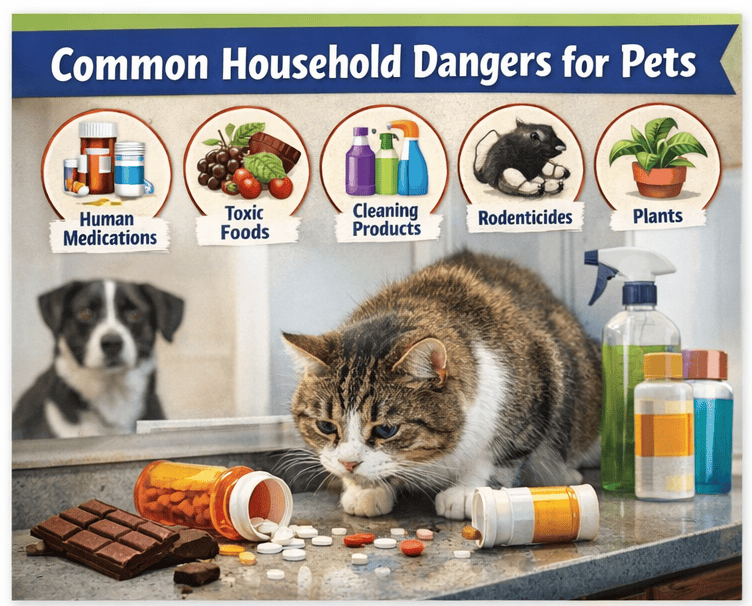
Veterinary poison control centers consistently report several categories of substances that are responsible for the majority of toxic exposures in pets.
1. Human Medications
Human medications remain the leading cause of pet poisoning each year.
Common examples include:
- Ibuprofen and naproxen
- Acetaminophen
- Antidepressants
- ADHD medications
- Sleep medications
Pets may ingest pills that fall on the floor or chew through medication containers.
Prevention Tip: Store medications in closed cabinets and avoid leaving pills on counters or bedside tables.
2. Toxic Foods
Many foods that are safe for people can be harmful or even fatal to animals.
Common toxic foods include:
- Chocolate
- Grapes and raisins
- Onions and garlic
- Macadamia nuts
- Alcohol
- Xylitol (found in sugar-free gum, candy, baked goods, and some peanut butter)
Xylitol is particularly dangerous for dogs because it causes rapid insulin release, which can lead to severe hypoglycemia and potentially liver failure (Pet Poison Helpline, 2023).
3. Marijuana and Cannabis Products
Veterinary toxicologists have reported a significant increase in cannabis exposures in pets over the past several years.
Dogs may ingest:
- Marijuana edibles
- Cannabis plant material
- THC vape cartridges
- Discarded joints or blunts
Edibles can be especially dangerous because they often contain additional toxins such as chocolate, raisins, or xylitol.
Symptoms of cannabis toxicity may include:
- Disorientation
- Loss of coordination
- Dilated pupils
- Urinary incontinence
- Tremors or lethargy
Most pets recover with supportive care, but large exposures can become serious.
4. CBD Products
CBD products marketed for pets have become increasingly common, but caution is still recommended.
According to the U.S. Food and Drug Administration, most CBD products have not been formally approved for veterinary use, and product quality can vary widely.
Concerns include:
- Incorrect THC labeling
- Contaminants such as pesticides or heavy metals
- Inconsistent dosing
Pet owners considering CBD products should consult their veterinarian and use products specifically formulated for animals.
5. Veterinary Medications
Even medications prescribed for pets can become dangerous if consumed in excess.
Pets may chew open bottles or ingest medications intended for another animal in the household.
Prevention Tip: Store all veterinary medications securely and out of reach.
6. Toxic Plants and Landscaping Hazards
Many plants commonly found in homes and gardens are toxic to pets.
Some of the most concerning include:
- Lilies (extremely toxic to cats)
- Sago palms
- Azaleas and rhododendrons
- Oleander
- Tulips and daffodil bulbs
Certain plants can cause neurological symptoms, heart rhythm abnormalities, or organ damage when ingested (FDA Center for Veterinary Medicine, 2023).
7. Rodenticides
Rat and mouse poisons are responsible for thousands of veterinary emergencies each year.
These products may cause:
- Internal bleeding
- Neurological symptoms
- Organ damage
Pets may ingest the bait directly or consume poisoned rodents.
8. Household Cleaning Products
Cleaning chemicals, disinfectants, and detergents can irritate the digestive system or cause chemical burns if ingested.
Prevention Tip: Store cleaning products in cabinets and keep pets away from freshly cleaned surfaces until they are dry.
9. Insecticides and Pesticides
Products designed to eliminate insects can also be harmful to pets if ingested or improperly applied.
Exposure may cause:
- Tremors
- Vomiting
- Neurological symptoms
10. Antifreeze and Automotive Fluids
Antifreeze containing ethylene glycol is extremely toxic to pets and can cause rapid kidney failure.
Because it has a sweet taste, animals may drink spilled fluid from garages or driveways.
Prevention Tip: Clean spills immediately and store automotive fluids securely.
Toxins Commonly Found in Yards and Outdoor Spaces
While many poison exposures occur inside the home, outdoor environments can also present hidden risks.
Pets may encounter toxins in yards, parks, and neighborhood areas, including:
- Fertilizers and lawn treatments
- Herbicides and pesticides
- Compost piles
- Toxic mushrooms
- Rodent bait used by neighbors
Some mushrooms that appear naturally in lawns can be extremely toxic to dogs. These mushrooms often appear after rainfall and may be difficult to distinguish from non-toxic varieties.
Supervising pets outdoors and regularly checking the yard for potential hazards can help reduce the risk of exposure.
Signs of Possible Poisoning in Pets
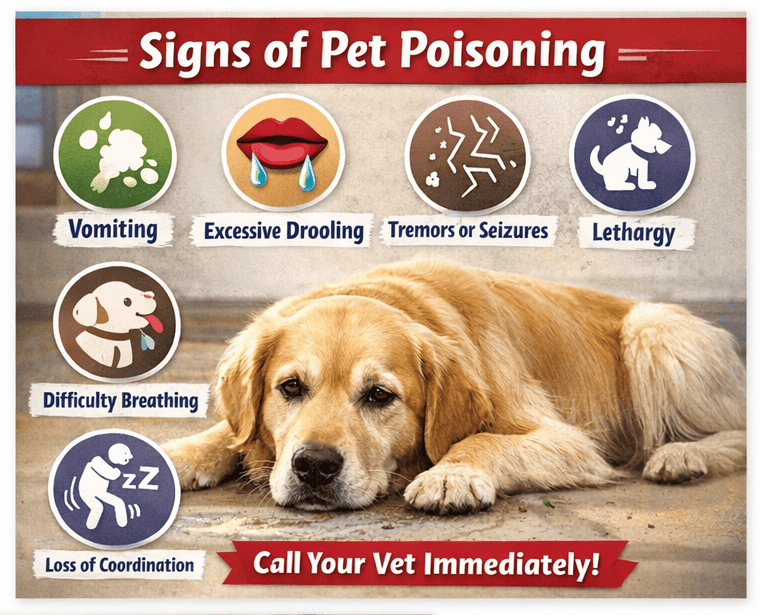
Symptoms of poisoning vary depending on the toxin involved, but common warning signs include:
- Vomiting or diarrhea
- Excessive drooling
- Tremors or seizures
- Weakness or lethargy
- Difficulty breathing
- Loss of coordination
Symptoms may appear quickly or may take several hours to develop depending on the substance involved.
If you suspect your pet has ingested something toxic, contact a veterinarian immediately rather than waiting for symptoms to worsen.
Why Immediate Veterinary Care Matters
When a pet ingests a toxic substance, time can be one of the most important factors in determining the outcome.
Veterinarians often have treatments available that can significantly reduce the severity of poisoning if administered early. These treatments may include inducing vomiting, administering activated charcoal to absorb toxins in the digestive tract, or providing supportive treatments such as intravenous fluids and medications.
Waiting to see whether symptoms develop allows toxins more time to be absorbed into the bloodstream and affect vital organs such as the liver, kidneys, or nervous system.
For this reason, veterinary toxicologists recommend seeking professional guidance as soon as a possible exposure occurs—even if the pet appears normal at the time.
What To Do If Your Pet May Have Been Poisoned
If you believe your pet may have ingested a toxic substance, taking the following steps can help ensure a faster and safer response.
- Remove access to the suspected toxin.
Move the pet away from the substance to prevent further exposure. - Identify the substance if possible.
Take note of the product name, ingredients, or packaging. - Contact a veterinarian immediately.
Professional guidance is important even if symptoms have not yet appeared. - Do not induce vomiting unless instructed by a veterinarian.
Some toxins can cause additional damage if vomiting occurs. - Monitor your pet closely.
Watch for changes in behavior, coordination, breathing, or alertness.
Quick Pet Poison Prevention Checklist
Pet owners can reduce the risk of poisoning with a few simple precautions:
- Store medications in closed cabinets
- Keep toxic foods out of reach
- Research plants before bringing them into the home
- Secure cannabis products and edibles
- Store cleaning products and pesticides safely
- Clean up automotive fluid spills immediately
Small adjustments in storage and awareness can significantly reduce the chances of accidental exposure.
Why Dogs Are Often Affected More Than Cats
Although both dogs and cats can experience poisoning, dogs are more frequently involved in toxin exposure cases.
Dogs are naturally curious and often investigate objects by chewing or tasting them. They may also be attracted to food items, trash, or spilled substances.
Cats tend to be more selective eaters, but they face unique risks from plant exposure and grooming behavior.
One particularly dangerous example is lily toxicity in cats, which can cause rapid kidney failure even from small exposures such as pollen on fur or water from a vase containing lilies.
Understanding the behavioral differences between species can help pet owners take additional precautions.
Emergency Pet Poison Resources
If your pet may have ingested a toxic substance, these services are available 24 hours a day:
ASPCA Animal Poison Control Center
📞 888-426-4435
https://www.aspca.org/pet-care/animal-poison-control
Pet Poison Helpline
📞 855-764-7661
https://www.petpoisonhelpline.com
These services are staffed by veterinary toxicology experts who can provide immediate guidance.
Keeping Pets Safe
Although the number of reported pet poisoning cases each year may seem alarming, many incidents are preventable. Awareness of common toxins and early recognition of symptoms can help pet owners respond quickly and seek veterinary care when needed.
By understanding the potential hazards in our homes and environments, we can take simple precautions that significantly reduce the risk of accidental exposure.
At Pawsatively Golden Pet Care, your pet’s safety and wellbeing are always our priority. During visits, we remain attentive to potential hazards in the home and yard environment and will always notify clients if we notice anything that could pose a risk.
Preventing accidental poisonings often comes down to awareness—and a little preparation can go a long way toward keeping our pets healthy and safe.
Frequently Asked Questions About Pet Poisoning
What are the most common causes of poisoning in dogs?
The most common causes of poisoning in dogs include human medications, toxic foods, household chemicals, rodenticides, pesticides, and certain plants. Veterinary poison control centers consistently report that medications and food-related toxins are responsible for a large percentage of emergency calls each year (ASPCA Animal Poison Control Center, 2024).
How quickly do poisoning symptoms appear in pets?
Symptoms of poisoning can appear within minutes or may take several hours depending on the substance involved. Some toxins, such as xylitol or antifreeze, can cause symptoms very quickly, while others may take longer to affect the body. Because timing varies widely, veterinary professionals recommend contacting a veterinarian as soon as exposure is suspected.
Can dogs recover from poisoning?
Many dogs recover from poisoning if they receive prompt veterinary treatment. Early intervention allows veterinarians to administer treatments that limit toxin absorption or support organ function. The outcome often depends on the type of toxin, the amount ingested, and how quickly treatment begins.
Should I induce vomiting if my dog eats something toxic?
Pet owners should never induce vomiting unless instructed by a veterinarian. Some toxins can cause additional damage if vomiting occurs, and certain substances may pose a choking risk. A veterinarian or poison control specialist can provide guidance based on the specific situation.
What should I do if my pet eats something toxic?
If you suspect your pet has ingested a toxic substance:
-
Remove access to the toxin
-
Identify the substance if possible
-
Contact a veterinarian or pet poison helpline immediately
-
Monitor your pet for symptoms
Seeking professional guidance quickly can significantly improve outcomes.
References
ASPCA Animal Poison Control Center. (2024).
https://www.aspcapro.org/resource/top-10-toxins-2024
Pet Poison Helpline. (2023).
https://www.petpoisonhelpline.com/pet-safety/top-10-pet-poisons
U.S. Food & Drug Administration. (2023).
https://www.fda.gov/animal-veterinary/animal-health-literacy/common-pet-toxins
American Veterinary Medical Association. (2022).
https://www.avma.org/resources-tools/pet-owners/petcare/household-hazards